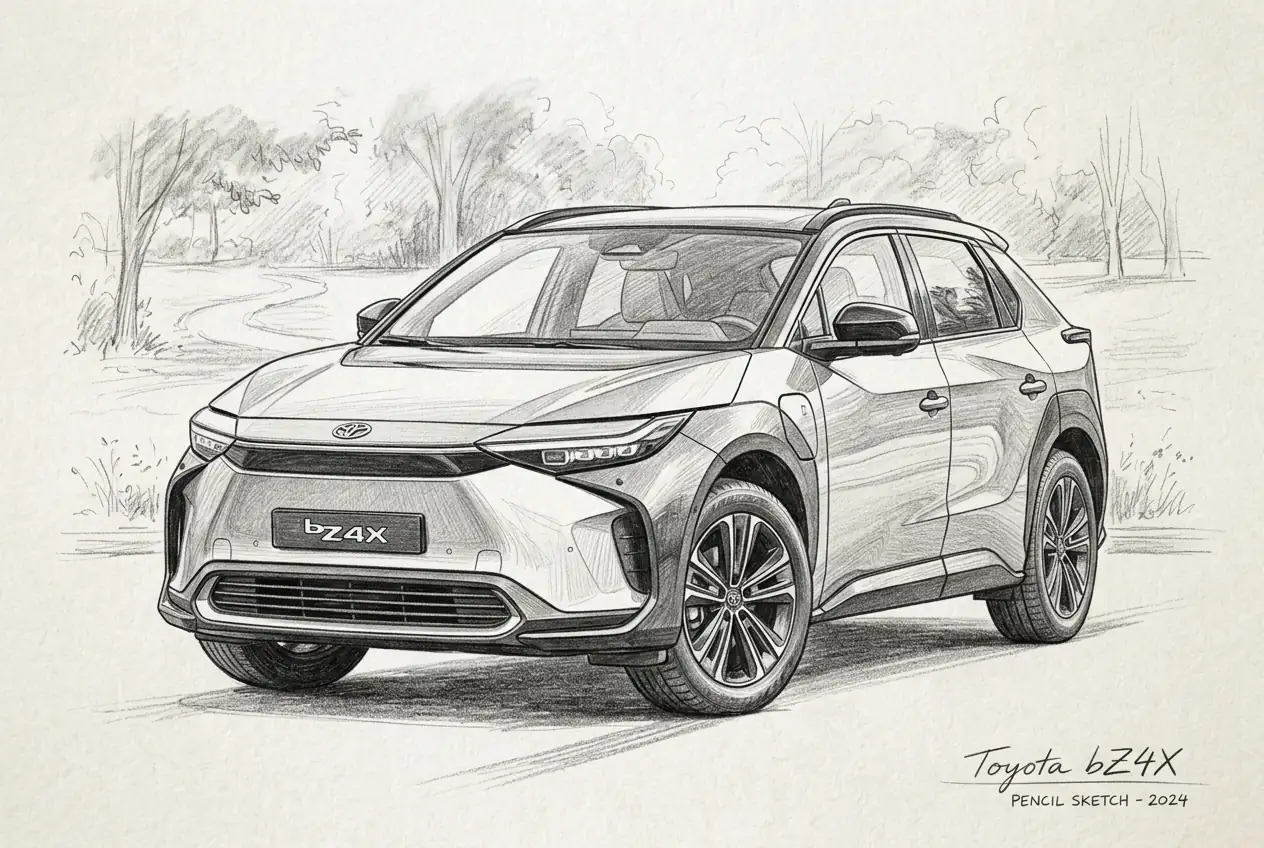
Shares shifted lower Monday as Toyota gave back 3.7% of last week's sharp rally, slipping to ¥2,971 on no fresh headlines — a classic case of traders cashing in gains after a multi-day run-up. The pullback matters because it tests whether the market's newfound excitement about Toyota's electric pivot has a durable foundation or is still riding headlines.
A 140% Registration Jump Sounds Huge — But the Base Was Tiny
Toyota saw a 140% increase in EV registrations in March, mostly tied to its refreshed electric crossover. Impressive growth, but context is essential: Toyota and Lexus sold a record 14,485 all-electric cars in Q1, more than twice Q1 2025's result — yet that still represented just 2.5% of total volume. Hybrids and gas vehicles still overwhelmingly drive the company's revenue. The stock rallied from roughly ¥2,843 to ¥3,085 in four sessions on this news, meaning Monday's dip erased only part of those gains.
The Product Is Finally Competitive, Which Changes the Math
The refreshed crossover is on track to be America's top-selling non-Tesla EV, with 10,029 units sold in Q1 — a 79% gain year-over-year. A lower starting price of around $35,000, which undercuts many rivals in its segment, and access to Tesla's charging network have transformed a laggard into a contender. Toyota has three additional all-electric models scheduled for launch in 2026, including a three-row electric SUV.
Chinese Rivals Are the Real Threat on the Horizon
BYD sold 147,601 purely electric vehicles in a single recent month and is quickly gaining share in many of Toyota's most important markets, including Europe, Southeast Asia, and Japan itself. Toyota's EV volumes, while accelerating, remain a fraction of what its largest Chinese competitor delivers.
$800 Million Bet Shows This Isn't Just a Sales Story
In March, Toyota invested $800 million in a Kentucky plant to prepare for EV production, part of a larger $1 billion U.S. manufacturing commitment.
Full-year EV sales hit 145,000 units (up 168%), and Toyota forecasts 243,000 this fiscal year. That spending signals management sees the EV shift as structural — but it also means margins face pressure as upfront factory costs rise before volume catches up.
Bottom line: The profit-taking is healthy, not alarming. Toyota's EV story is finally credible, but the stock needs sustained volume growth — not just registration headlines — to justify further upside.