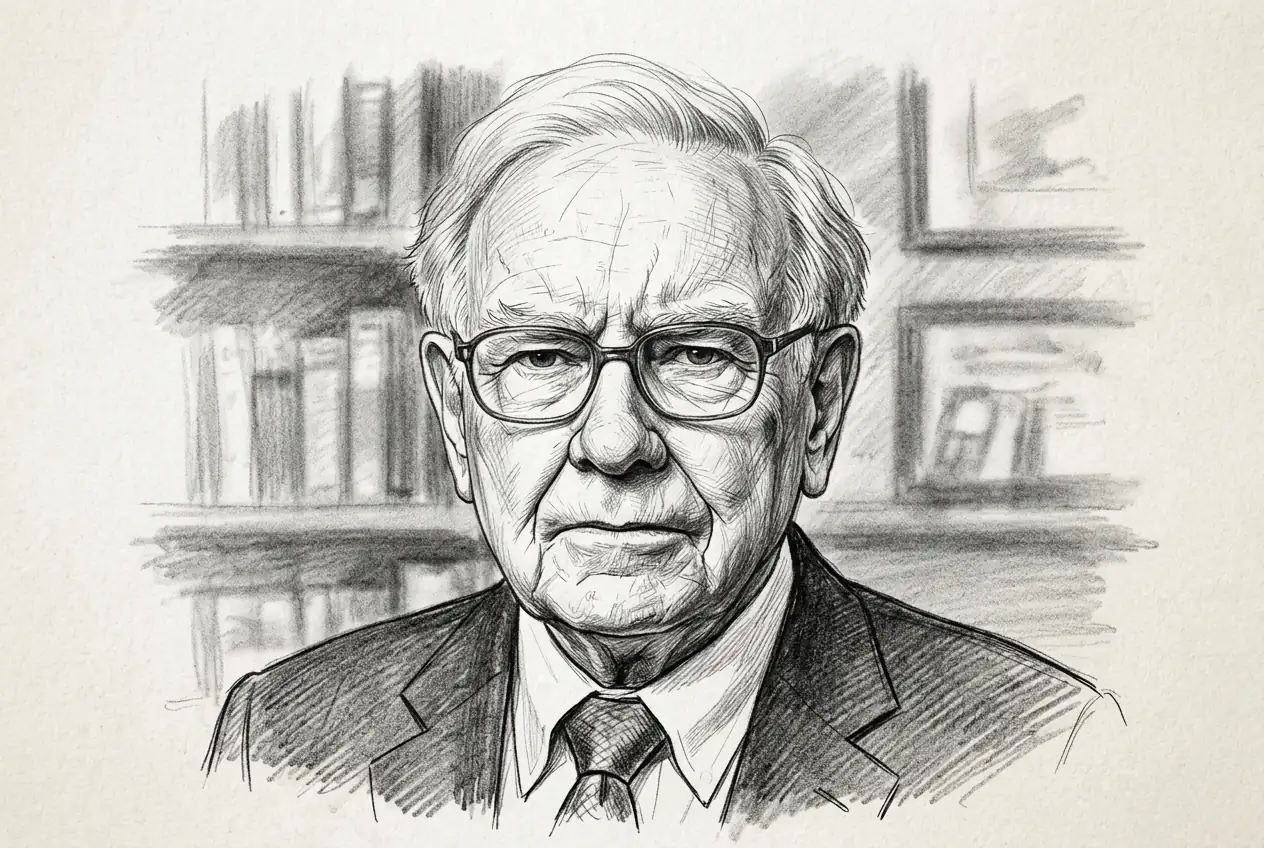
Shares barely flinched as Berkshire Hathaway completed the most telegraphed succession in corporate history on Friday, naming Howard Buffett chairman and moving Warren Buffett, 96, to chairman emeritus. But the stock's muted slide masks a deeper tension: Berkshire shares are up just 1% in 2026 while the S&P 500 has rallied more than 11%. The question now is whether a company built around one man's judgment can sustain its premium without him.
• The Formal Break Is Complete, but the Real Handoff Happened Months Ago. The announcement comes just eight months after Buffett stepped down as CEO of the conglomerate he built into a trillion-dollar company.
Abel's earlier appointment as CEO had already reset investor expectations about who makes consequential decisions; the chairman's role had already become largely custodial well before the title formally changed. That explains why Class B shares fell just 2% to $509.20 on Friday — far less dramatic than the 5% drop that followed the original CEO succession announcement last year.
• Greg Abel Is Already Spending the War Chest. The biggest investor worry — that Berkshire's record cash pile would sit idle — is fading. Abel spent approximately $4.5 billion on buybacks in Q2, a sharp increase from $235 million in Q1, and swung to the buy side in equities, accumulating nearly $20 billion in net purchases after 14 straight quarters of net selling.
Cash reserves stood at $365.5 billion as of June 30, down from a record $397.4 billion. Abel is proving he will deploy capital, not just guard it.
• Howard's Job Is Cultural Insurance, Not Running the Business. Buffett framed the division of labor bluntly: "Greg runs the company; Howard will guard its culture and values – both worth more than anything on our balance sheet."
Howard's role is explicitly nonexecutive, focused on preserving Berkshire's decentralized operating philosophy. This matters because Berkshire's roughly 80 subsidiaries run semi-autonomously — a structure that works only if the board resists the temptation to centralize.
• The "Buffett Premium" May Fade — But So Might the Discount. Berkshire's price-to-book ratio has already compressed from 1.62 to 1.53 since the transition began, suggesting investors have partially priced out the Buffett premium.
One analyst warned: "There was a premium awarded Berkshire stock because of this famed investor who was allocating capital. I think it's naive to assume that this is business as usual." The counter-argument: with $365 billion in dry powder and operating earnings up 16% year-over-year, Berkshire's fundamentals may eventually matter more than its mythology.