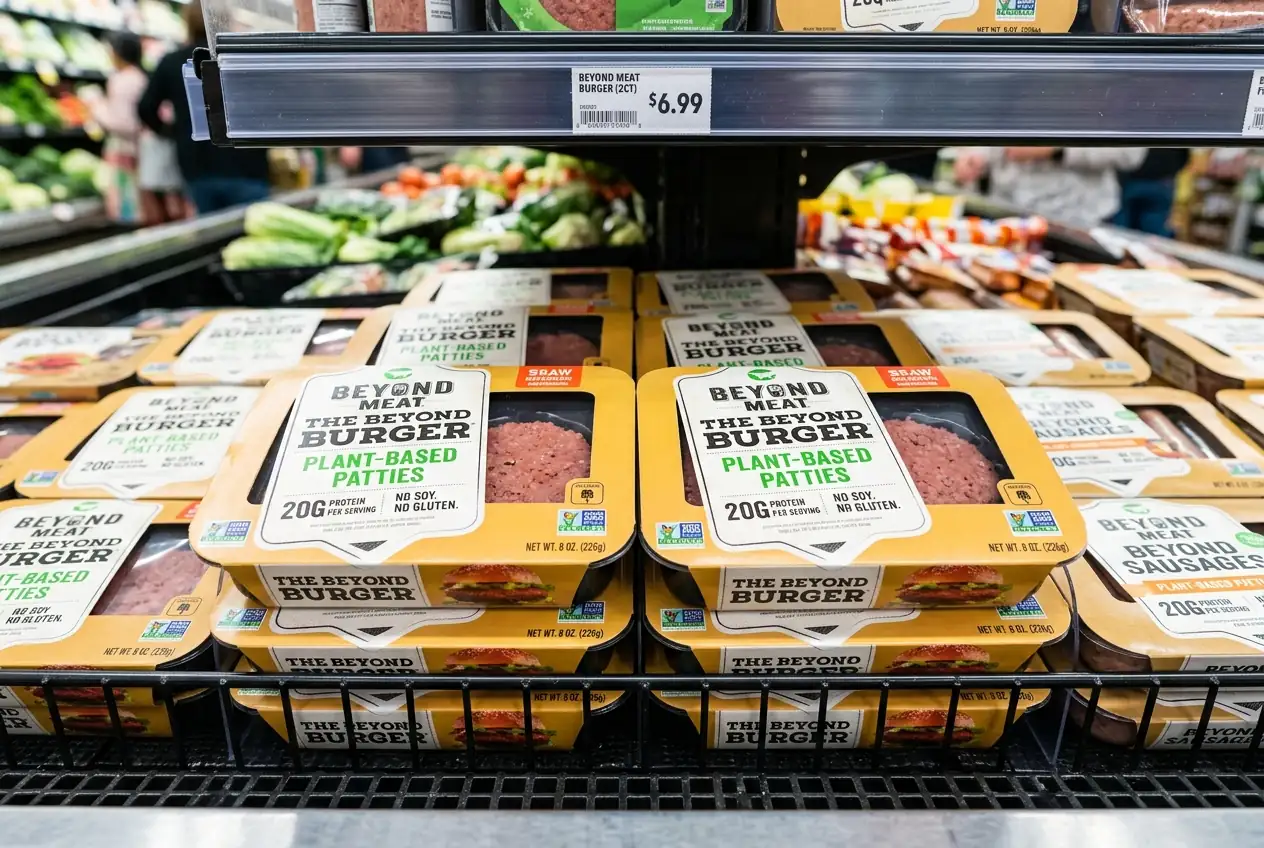
Shares of Beyond Meat cratered 14.5% to $0.44 on August 11, plumbing fresh lows after the plant-based protein maker disclosed an amendment to its convertible-notes agreement that opens the door to repaying debt with stock — a move that signals desperation to investors already rattled by shrinking revenue and dwindling cash. Beyond Meat's Debt-for-Stock Swap Option Spooks Investors — Is This Financial Engineering or a Dilution Trap?
Shares of Beyond Meat plunged 14.5% to $0.44 after the company disclosed an amendment that lets it retire old debt by issuing new stock — a lifeline for the balance sheet that could flood the market with shares and crush existing holders.
• The Company Just Gave Itself Permission to Pay Debt With Stock
Beyond Meat amended its 2030 convertible notes agreement on August 10, removing restrictions on its ability to repurchase or exchange its remaining 2027 notes for cash and/or equity.
The amendment also extends the make-whole period — a window during which converting bondholders receive extra compensation — from October 15, 2028 to January 15, 2029. Translation: the company can now offer bondholders freshly printed shares instead of cash to wipe out the $29.5 million in 2027 notes still on the books. These changes give Beyond Meat greater flexibility in managing its capital structure and addressing its 2027 notes. But at $0.44 a share, using equity means issuing roughly 67 million new shares — massive dilution against the current 515.8 million outstanding.
• The Cash Picture Explains the Urgency
Cash and restricted cash declined to $186.1 million from $217.5 million at the beginning of the year.
The carrying value of outstanding debt remained above the cash balance at $323.8 million.
Net cash used in operating activities during the first six months of 2026 was $23.2 million. At that burn rate, paying off even $29.5 million in cash would consume nearly seven months of operating cash outflows. The equity option preserves liquidity but tells the market Beyond Meat cannot comfortably pay its bills in cash.
• Revenue Is Still Shrinking, Limiting Any Path to Grow Out of Debt
Q2 2026 revenue fell 8.2% to $68.8 million as product volume declined 9.5%.
Gross margin narrowed to 8.5% from 10.6%, while the adjusted EBITDA loss widened to $27.7 million.
Management expects Q3 revenue of $60 million to $65 million, with the midpoint about 9% below Q2. A company guiding down sequentially has little hope of outgrowing a $324 million debt pile.
• The Analyst Consensus Says It All
The most recent analyst rating on BYND stock is a Sell with a $0.50 price target — and the stock already trades below that. With the share count poised to balloon, revenue contracting, and cash burning at roughly $4 million a month, this amendment reads less like a strategic maneuver and more like a company running out of options — not creating them.