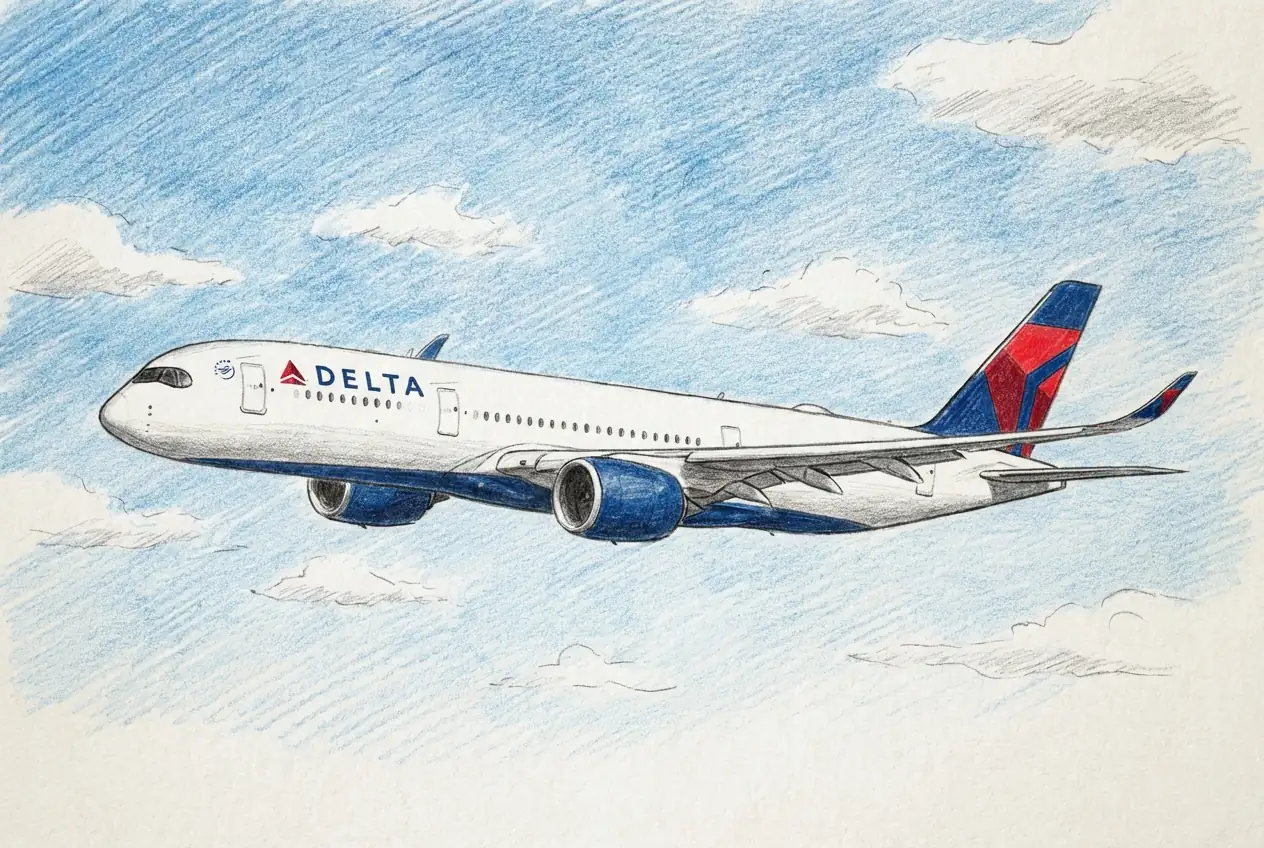
Shares of Delta Air Lines surged 4.2% to $65.85 Tuesday as the carrier announced a multi-year deal with Amazon to install low-orbit satellite internet on 500 aircraft starting in 2028 — a move that deepens Delta's tech alliance and directly challenges SpaceX's Starlink grip on airline Wi-Fi. The rally outpaced a strong broader market (S&P 500 +2.48%), suggesting investors see real strategic value here, though the stock remains below last week's $67.99 close.
- Delta Picked Amazon Over Starlink, and the Existing Relationship Explains Why. Delta reportedly considered Starlink but chose Amazon in part because of its existing relationship with Amazon Web Services.
The agreement builds on a collaboration that began when Delta migrated substantial portions of its technology infrastructure to AWS, which powers reservation systems, operational tools, and customer-facing applications. For shareholders, this signals a deepening dependency on a single tech ecosystem — efficient but risky if Amazon's satellite network stumbles.
- The Wi-Fi Will Be Free, Meaning Delta Is Spending to Retain Loyalty Members, Not Generate Revenue. Leo-powered in-flight Wi-Fi will be free for all Delta SkyMiles members.
More than 163 million SkyMiles members have connected to Delta's Wi-Fi to date. CEO Ed Bastian told Fox Business the cost will be "substantially less than what we're paying today." Industry sources estimate each aircraft installation costs $300,000–$500,000, putting the deal's potential value north of $150 million — though neither company disclosed financial terms. This is a bet on brand premium, not a new revenue line.
- Amazon's Satellite Network Is Still Far Behind Starlink. Amazon has about 200 satellites in space versus more than 10,000 for Starlink, which began commercial service in 2020 and now has over 10 million subscribers.
Amazon asked the FCC in January for a two-year extension to a July 2026 deadline to deploy half of its 3,200 planned satellites. Delta is betting on a constellation that doesn't fully exist yet. If Amazon's launch pace falters, Delta's 2028 rollout timeline could slip.
- Rivals Are Already Flying With Starlink. Southwest Airlines last month announced a deal to use Starlink, which has previously done deals with United, Alaska, and Hawaiian Airlines.
Amazon's Leo is expected to deliver speeds three to five times faster than what Delta currently offers — but that advantage only materializes if the satellites are in orbit on time. Delta's current fleet of ~1,200 planes still runs on Viasat and Hughes, meaning today's passengers won't notice a difference for at least two years.
The bottom line: This deal strengthens Delta's premium brand story but delivers zero near-term financial impact. Today's pop looks more like a sentiment trade than a fundamental repricing.