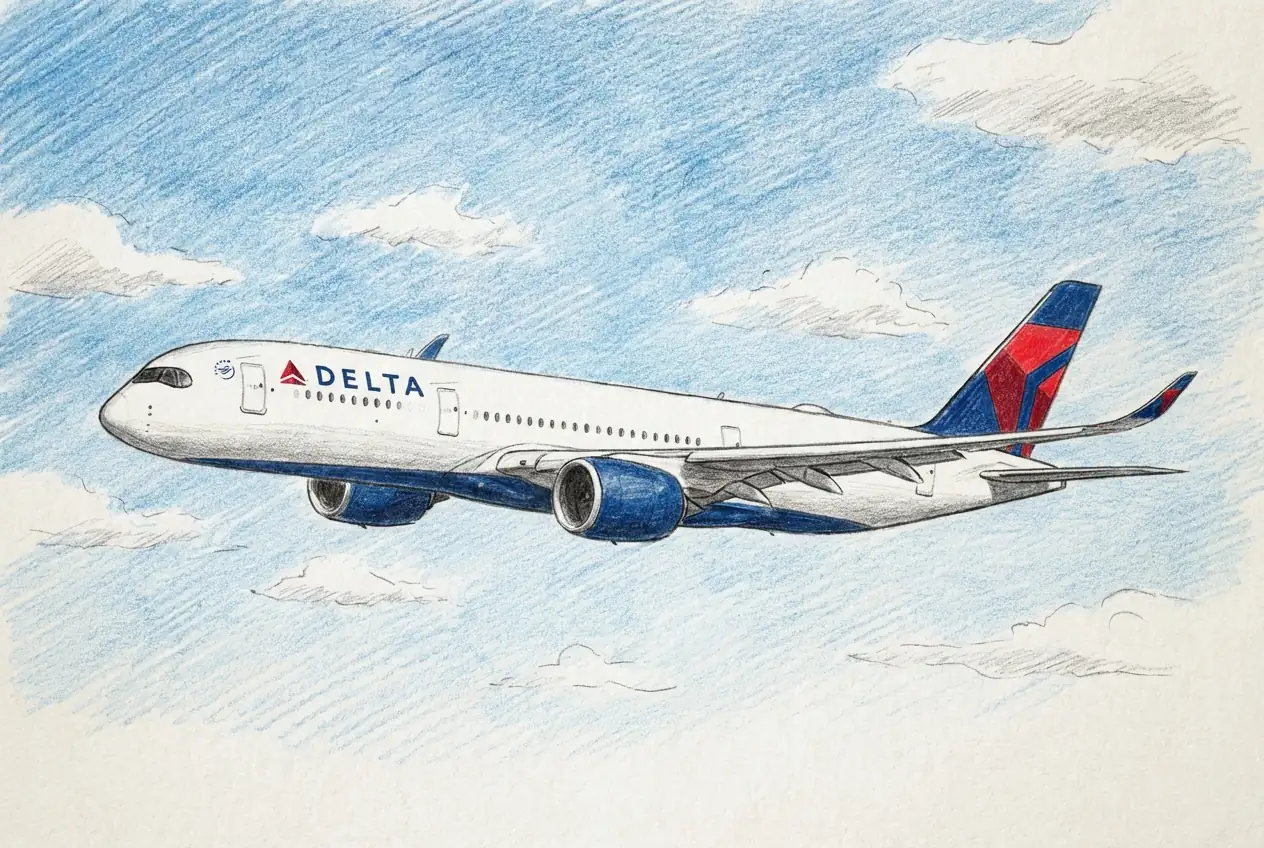
Shares of Delta Air Lines fell $3.15 to $64.45 (−4.7%) on April 2 as investors digested yet another dramatic engine failure — this time aboard a São Paulo-to-Atlanta flight — while the broader market also retreated, with the S&P 500 off 1.35% and the Nasdaq down 1.8%. The Airbus A330-300, operating flight DL104, suffered a serious left-engine failure seconds after takeoff on the night of March 29.
The aircraft carried 288 people and returned safely within approximately 10 minutes. Delta's drop roughly triples the market's decline, signaling company-specific anxiety layered on top of macro weakness.
Three Engine Emergencies in Under Two Months Aren't Routine
The Guarulhos incident adds to a series of engine-related emergencies involving Delta in recent months: in February 2026, a Boeing 737-900 lost its left engine during takeoff from Savannah, and in July 2025, a Boeing 767-400 suffered an engine fire after takeoff from Los Angeles.
A fourth engine diversion occurred near Richmond on March 27, 2026. A cluster this dense invites regulatory scrutiny and potential fleet inspections that could ground aircraft, squeeze capacity, and dent revenue at the worst time.
The Timing Couldn't Be Worse — Q1 Earnings Arrive April 8
The next big catalyst is Delta's Q1 2026 earnings report on April 8.
On March 17, the company raised its March-quarter revenue growth outlook to 7%–9%.
CEO Ed Bastian guided for full-year 2026 earnings of $6.50–$7.50 per share and free cash flow of $3–$4 billion. But headline risk from fiery passenger videos and potential investigation costs could overshadow those numbers. At ~8.5× trailing earnings, the stock is cheap — but cheap can get cheaper when safety questions arise.
Rising Fuel and Geopolitical Risk Compound the Pressure
The market is also pricing in cost pressure: jet fuel prices surged as conflict-driven supply fears widened.
The S&P 500 descended 5% in March alone. Delta's 14% slide from its February all-time high of $75.15 reflects both macro headwinds and operational doubt. Delta's exclusion from AirlineRatings.com's 2025 list of the world's 25 safest airlines — scoring just 5.7 out of 10 — adds reputational weight.
The Bottom Line: No one was hurt, and single-engine incidents are survivable by design. But investors aren't pricing a single event — they're pricing a pattern. With earnings days away and fuel costs elevated, Delta must convince the market that its aging widebody fleet isn't becoming a liability.