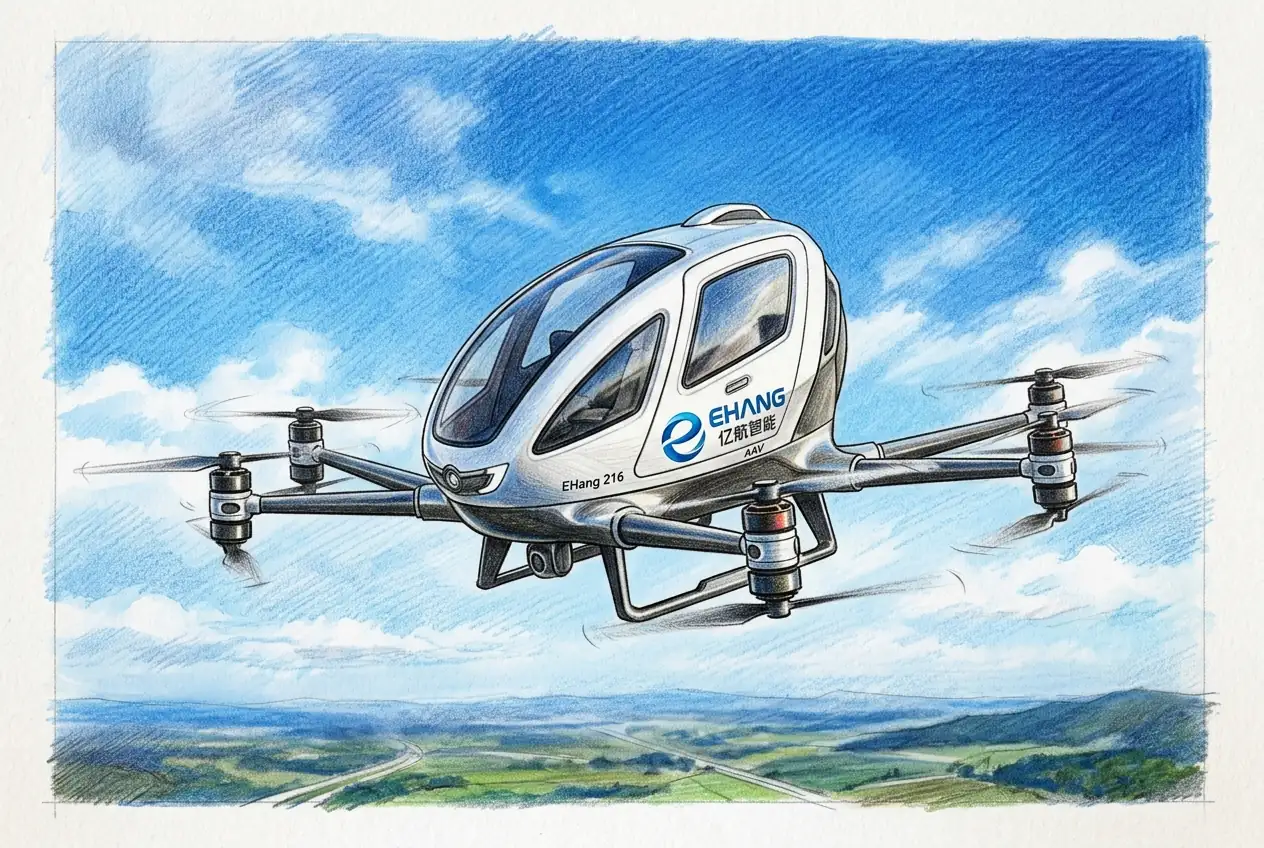
Shares of EHang Holdings tumbled 7.2% to $8.57 after UBS — one of its loudest advocates — abandoned its bullish stance, raising a fundamental question: if the bank that called this a Buy no longer sees enough upside, who does?
- UBS Slashed Forecasts by Up to 70%, Pushing Breakeven Out Three Years
UBS downgraded EHang from Buy to Neutral and cut its price target nearly in half, from $21 to $11.10, citing slower-than-expected commercialization of the company's pilotless passenger aircraft. The numbers behind the call are stark: the bank cut its 2026–2028 shipment and revenue forecasts by 50% to 70% and now expects EHang to reach breakeven in 2029–2030, versus its prior forecast of 2026–2027. For a company that still loses money, pushing profitability out three years forces investors to hold through far more cash burn than they bargained for.
- Government Approvals Are the Bottleneck, Not the Technology
Commercial operations for EHang's electric air taxis in Hefei and Guangzhou remain dependent on government approvals, with no clear timeline for broader deployment. The company had targeted ticketed passenger flights launching in March 2026. Compounding the issue, EHang revised its 2025 revenue downward by roughly RMB 90 million (~18%) after reassessing how it counted certain transactions — a red flag that makes forward guidance harder to trust. UBS estimates its own revenue projections now sit 30%–50% below Wall Street consensus , meaning further analyst cuts may follow.
- Q1 Results Next Week Could Reset the Narrative — or Deepen It
EHang plans to report Q1 2026 results on June 9 , just days away. Management had guided to full-year 2026 revenue of RMB 600 million (~18% growth) , but UBS's dramatic revision suggests that target is in doubt. The company delivered 221 units in 2025 and achieved its first quarterly GAAP profit in Q4 , proving demand exists — the question is whether it can scale fast enough.
- Overseas Expansion Is the Bright Spot, but It's Still Small
UBS highlighted progress including test flights in Thailand and plans to deliver 100 aircraft to 20 approved operating zones there in 2026.
Management expects overseas revenue to climb from low-single-digit share to potentially double-digit contribution this year. But international sales remain a fraction of the total, not yet large enough to offset a domestic slowdown gated by regulators. With shares now 40% below where they started 2026, the stock prices in deep skepticism — but not yet a worst case.