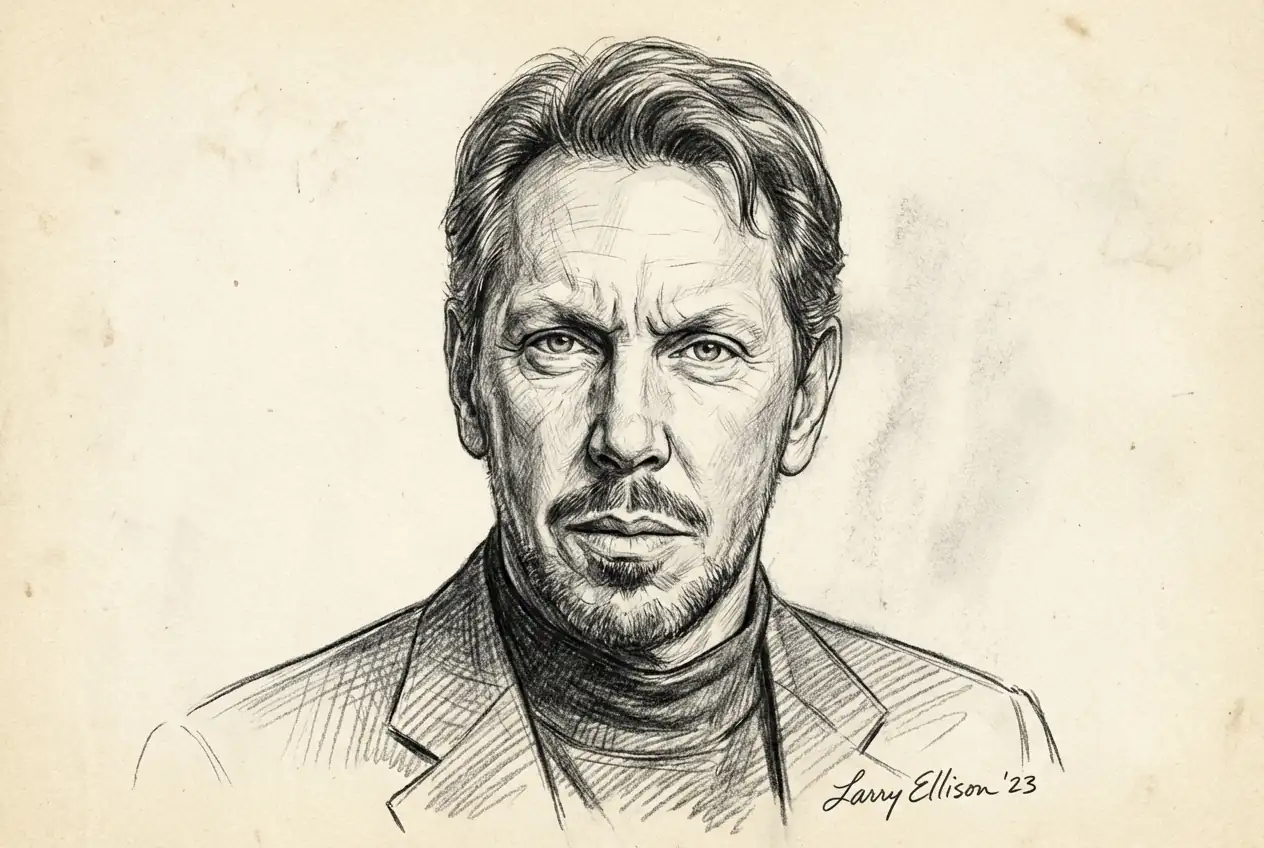
Shares of Oracle fell 5.3% to $144.20 Monday after a weekend of whiplash: co-founder Larry Ellison canceled his plan to sell as many as 50 million shares — a holding worth $7.5 billion — just a day after a regulatory filing disclosed the trading plan, which had been adopted on June 22 and was set to end Oct. 24.
The company did not offer a reason for the change in plans. The reversal lands at a fraught moment: Oracle is burning cash to fund an AI infrastructure buildout while broader tech stocks slide on interest-rate anxiety.
The Abrupt Reversal Spooked the Market Instead of Reassuring It. "No Oracle stock was sold under that plan, and he has no other plans to sell any of his Oracle stock," Oracle said. Bulls frame the cancellation as a founder betting on his own company after a 22% year-to-date decline. But the sequence — file, disclose, cancel within 24 hours — raises governance questions and injected volatility at the worst time. Oracle shares are down over 50% from their peak of $304.38 a year ago.
Oracle's AI Boom Is Real but Costs Are Staggering. Q1 revenue hit a record $19.3 billion, up 30% year-over-year, as cloud infrastructure revenue jumped 121%.
Contracted future revenue not yet recognized reached a record $664 billion. Yet capital expenditures for the quarter were $28 billion, leading to negative free cash flow of $5 billion, and full-year spending is projected at $90–$95 billion. Unlike competitors such as Meta or Alphabet, which self-fund data center expansions from enormous cash flows, Oracle is funding a hyperscaler-scale expansion from a BBB-rated balance sheet already generating negative free cash flow.
Ellison's Personal Stake Mirrors the Company's Dilemma. Ellison controls more than 40% of Oracle , so any sale would weigh heavily on the stock. Oracle stock had fallen roughly 16% to 18% since the plan was adopted in late June, and a person close to Ellison said he views the shares as undervalued. Selling into that decline would have locked in steep losses. Keeping shares also keeps his paper wealth tied to an outcome that hinges on converting a $664 billion backlog into real revenue — while Oracle raised $43 billion in debt financing last fiscal year and expects to raise approximately $40 billion more through a mix of debt and equity in fiscal 2027.
Bottom line: Ellison's hold signals conviction, but conviction alone won't close the gap between Oracle's massive AI orders and the cash needed to fulfill them. Until free cash flow turns positive, every insider move will be read through that lens.