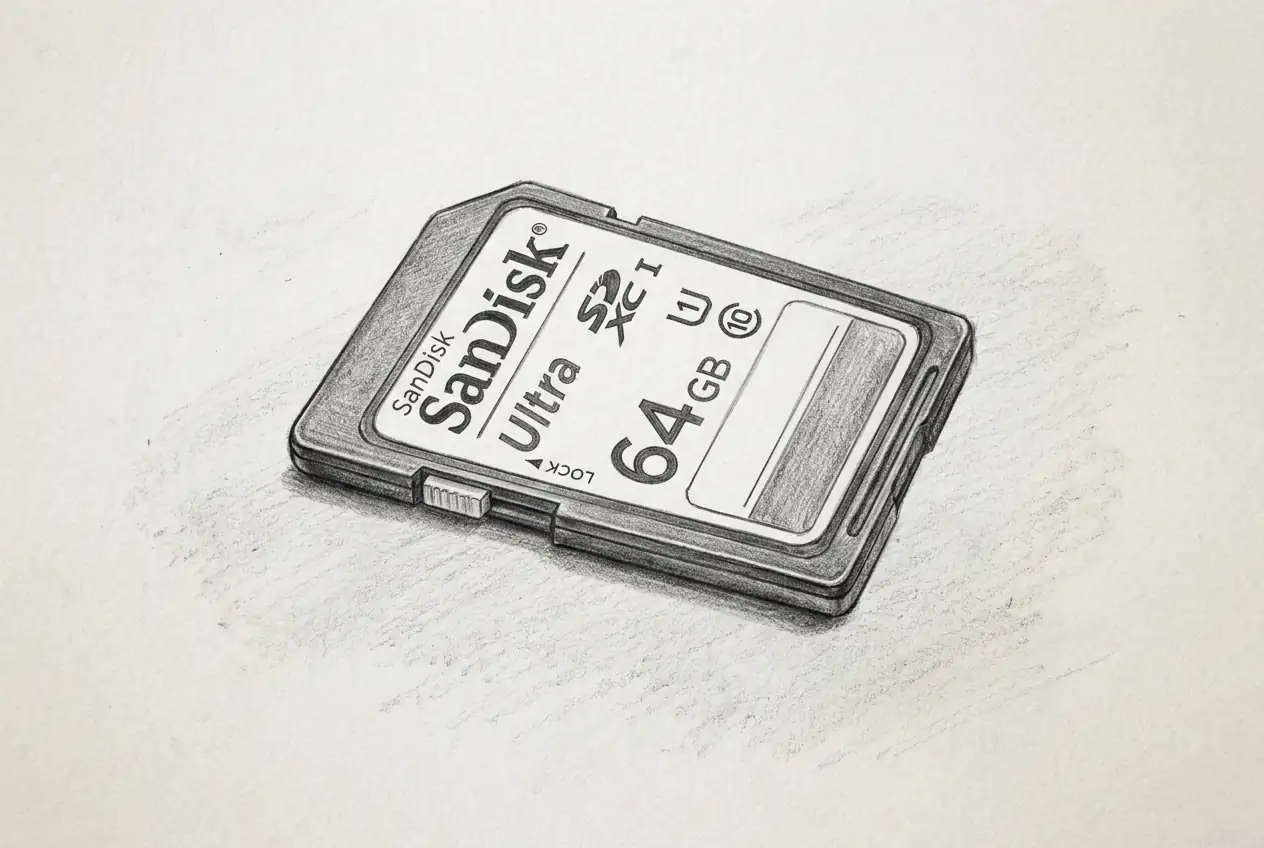
Shares of SanDisk dropped sharply in pre-market trading on July 13, falling to $1,785.88 — a 6.8% decline from Friday's close of $1,915.92 — after a blistering four-session rally that added nearly $300 per share. The pullback raises a pointed question: how much of the AI-driven memory thesis is already baked into the stock? SanDisk Drops 6.8% After a Scorching Rally — Can AI Memory Demand Justify a Stock That Has Already Risen 700% This Year?
Shares slid to $1,785.88 in pre-market trading Monday, erasing a chunk of last week's $300-per-share surge that was sparked when Goldman Sachs nearly doubled its price target. No new negative headline triggered the drop — this is the market catching its breath after one of the most violent rallies in the S&P 500 this year.
• Goldman's Massive Target Hike Lit the Fuse — and the Hangover Was Inevitable
Goldman raised its 12-month target to $2,200 from $1,200, applying a 20x price-to-earnings ratio to a normalized earnings estimate of $110 per share — roughly 30% above Wall Street consensus.
Analyst James Schneider projects a "very strong" fiscal fourth quarter driven by persistent NAND supply constraints. That bullish call helped push the stock from $1,617 on July 7 to $1,916 by Friday — an 18.4% gain in four sessions. Today's 6.8% giveback looks like textbook profit-taking after a near-vertical move.
• The Numbers Are Genuinely Staggering — But the Stock Already Reflects That
In the most recent quarter, revenue nearly doubled sequentially to $5.95 billion, and adjusted gross margins jumped to 78.4% from 51.1% three months earlier.
Management guided next quarter's revenue to $7.75–$8.25 billion with earnings of $30–$33 per share. Yet the stock is already up roughly 707% year-to-date , and valuation concerns have surfaced as it trades at elevated earnings ratios — meaning investors are paying a premium relative to current profits that assumes years of continued hypergrowth.
• The Real Risk Isn't Demand — It's What Happens to Pricing When New Factories Come Online
Investors are no longer just asking whether AI demand is strong; they're asking whether current margins can survive new capacity additions.
Goldman itself flagged downside hazards including Chinese competitor YMTC accelerating its technology roadmap and a potential failure of structural NAND pricing to hold.
Samsung and SK Hynix recently announced a combined $520 billion in new memory fab investment , which could eventually ease the supply crunch that underpins SanDisk's pricing power.
• An August Earnings-and-Investor-Day One-Two Punch Will Be the Next Verdict
SanDisk's investor day on August 13 follows just eight days after earnings, giving management a window to detail its pipeline of long-term customer agreements and financial targets.
Memory stocks have a long history of punishing investors who mistake the top of a cycle for a new normal. For shareholders, the question is straightforward: will August's numbers prove the AI storage boom has years left, or reveal a cycle nearing its peak?