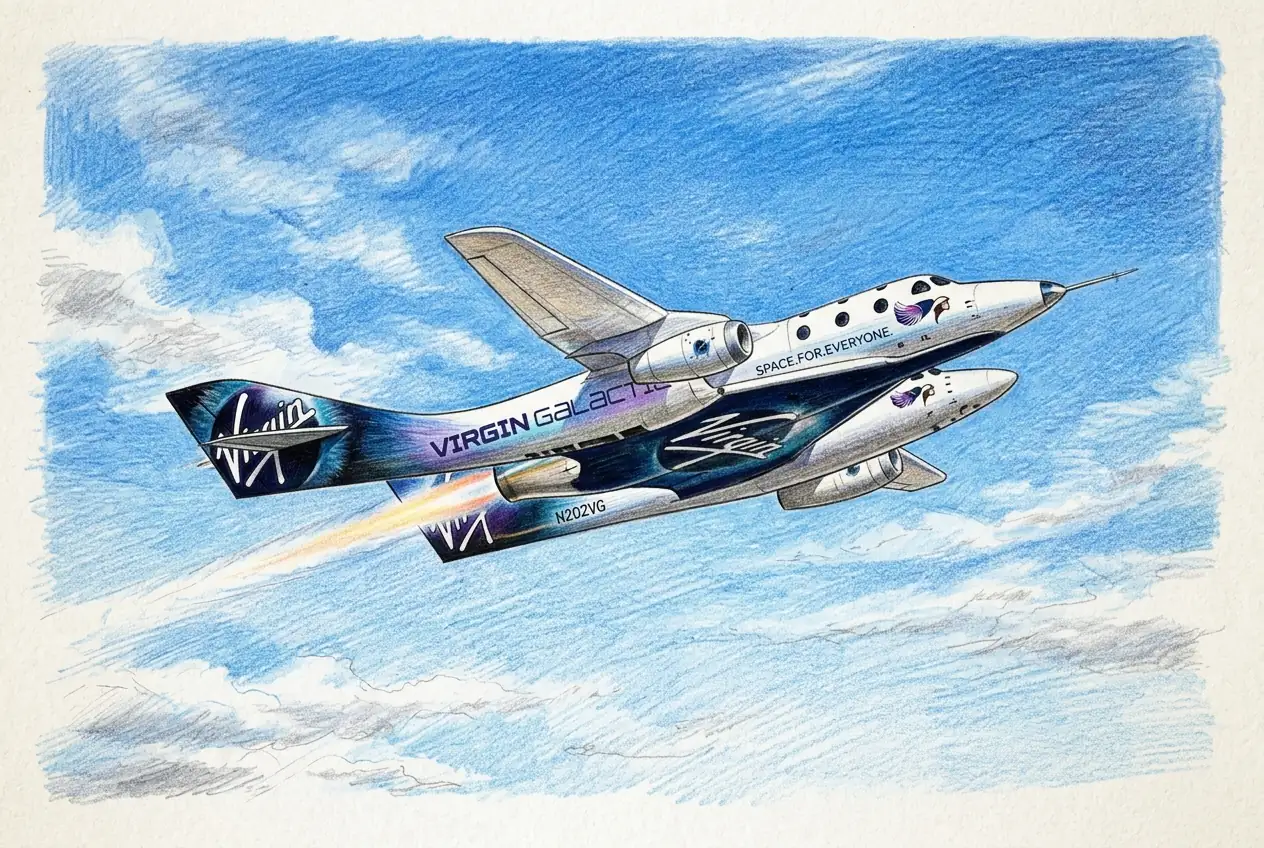
Shares of Virgin Galactic surged 9% to $5.13 on June 11, extending a rebound from early-June lows as the market digested the company's decision to erase $30.5 million in high-interest debt by printing new stock instead of spending cash. The move clears a near-term funding hurdle, but it underscores a deeper question: whether a pre-revenue space-tourism venture can keep swapping paper for survival without eroding shareholder value along the way.
Paying Off Debt With Stock Saves Cash — at Shareholders' Expense
Virgin Galactic redeemed $30,524,000 in principal of its 9.80% First Lien Notes by issuing 6,734,960 new common shares. That eliminates roughly $3 million in annual cash interest on the redeemed portion. But the use of stock rather than cash to repay debt increases the number of shares outstanding, reducing existing shareholders' ownership percentage. Management framed the timing as opportunistic: it believes market conditions provided an opportunity to execute the transaction. Translation — the stock had bounced enough to make the dilution math tolerable.
$172 Million in Debt Remains, With No Payment Due Until 2028
After the redemption, approximately $172 million in aggregate principal amount of First Lien Notes remained outstanding, and no principal payment will be due until March 31, 2028. That buys breathing room. But Virgin Galactic has about $219.9 million in cash and short-term investments against total liabilities of $526.5 million, and Q2 2026 free cash flow is guided to negative $87M–$92M. At that burn rate, the remaining cash covers roughly two to three quarters without additional financing.
The Real Clock Is the Q4 Commercial Launch
Virgin Galactic transferred its first next-generation spacecraft into the test-and-launch hangar, started ground testing, and reaffirmed Q3 2026 aerial testing and Q4 2026 commercial launch.
The company reopened ticket sales at $750,000 per seat and says it has several hundred pre-booked customers. Revenue from those seats is the only path to slowing dilution — but first flights must actually happen on schedule.
Wall Street Is Cautiously Watching, Not Cheering
Jefferies reiterated a Buy with a $5 price target, citing progress on the first new spaceship and a cash position that provides a near-term funding window. SPCE is now trading above that target at $5.13 — a sign the stock is pricing in execution that hasn't occurred yet. Q1 2026 revenue was only about $1.5M, while free cash flow sat around -$93M. Until flights generate real ticket revenue, every rally rests on faith, not fundamentals.