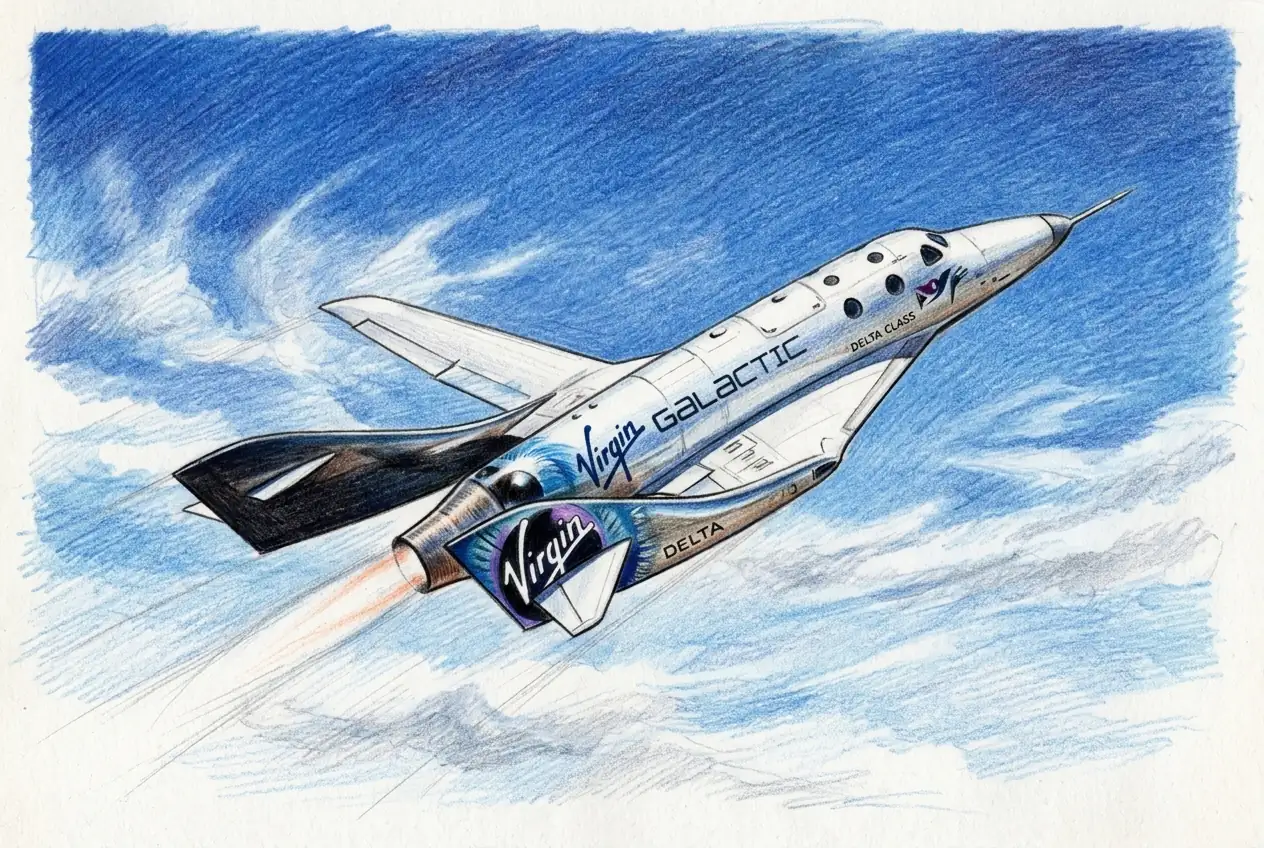
Shares of Virgin Galactic tumbled 9.5% to $3.00 after the company's August 12 earnings call pushed the debut of its next-generation spacecraft from late 2026 to February 2027, citing the need for additional avionics and systems work. The slip overshadowed a narrower quarterly loss and a slight revenue beat — and for a company burning cash with no meaningful revenue, timeline credibility is the stock.
-
Another Delay in a Long History of Them. Virgin Galactic has bet its future on its new class of spacecraft, which it expected to enter commercial service in 2026 — but analysts have long been skeptical of its timeline given a track record of delays. The original Delta debut was once targeted for summer 2026, then slipped to fall 2026 , and now slides again to February 2027. The company remains pre-commercial, with revenue limited to small access fees, and its operating model depends on flawless execution of vehicle production, testing, and certification timelines — execution it keeps failing to deliver.
-
Cash Is Draining With No Revenue to Refill It. Virgin Galactic is burning roughly $90 million of cash per quarter while sitting on about $220 million of liquidity. A three-month push to February 2027 means at least one more quarter of heavy cash burn before any ticket revenue flows in. The company has about $273 million in outstanding debt, and at the current pace, its cash runway extends only a few more quarters.
With a current ratio near 1 and quick ratio at 0.8, SPCE does not have a huge liquidity cushion — the company keeps leaning on stock sales and shelf offerings to stay afloat.
-
Short Sellers Already Had Conviction — Now They Have Ammunition. About 40 million shares — nearly 30% of outstanding stock — are sold short , a sign of deep market skepticism. The delay validates that bet. The stock had rallied nearly 40% recently heading into earnings, meaning much of the run-up was speculation on positive catalysts that didn't arrive.
-
The PR Says "Refinement," the Balance Sheet Says "Survival." Management framed the delay as a prudent installation decision. But the stock trades on the promise of future revenue rather than fundamentals, leaving it highly sensitive to delays or execution setbacks.
Over the last 12 months, SPCE posted just $1.31 million in revenue against $259 million in losses. Every month without flights costs shareholders both in cash burn and in credibility — a currency Virgin Galactic can no longer afford to spend.