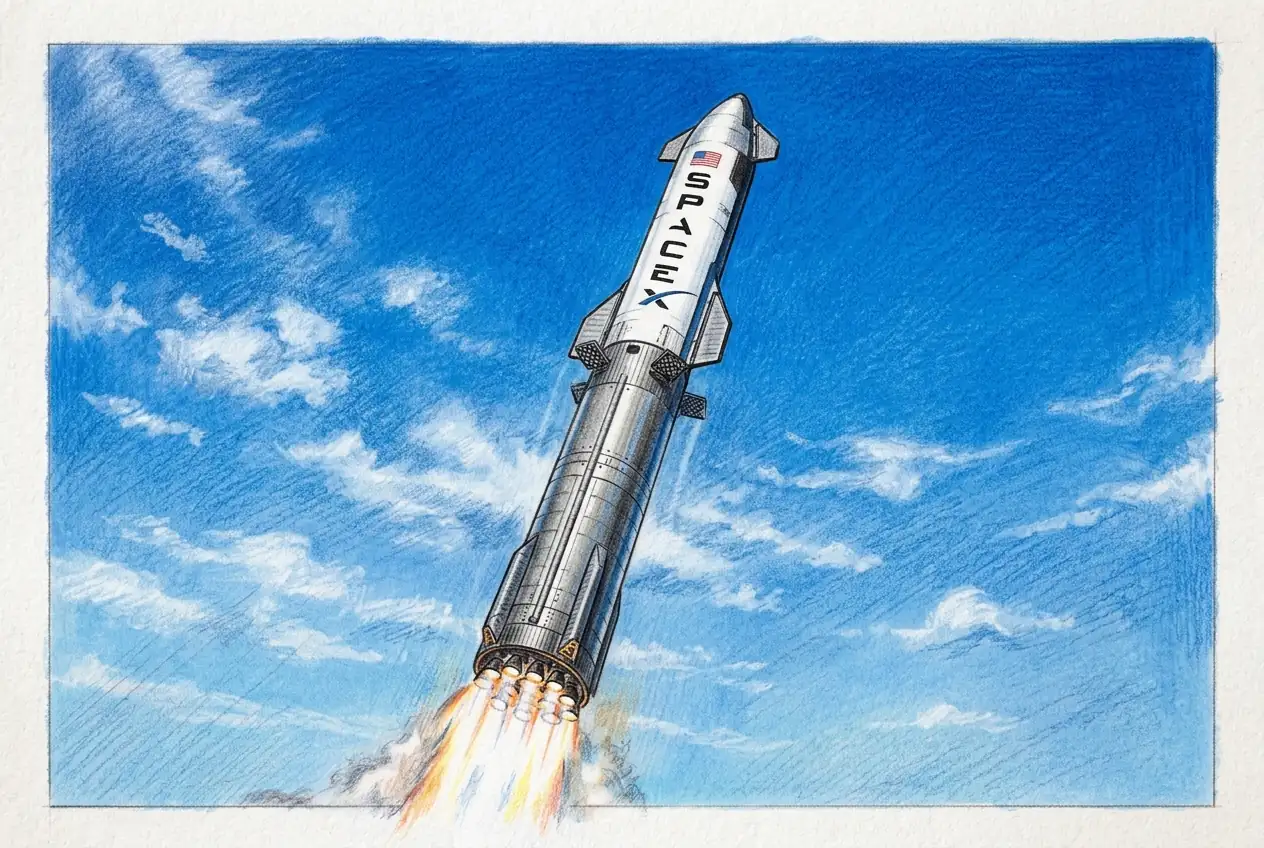
Shares of SPCX34.SA shifted higher on Monday, climbing 3.9% to BRL 42.34, as bargain hunters moved in after a punishing five-session decline that dragged the Brazilian depositary receipt from BRL 46.00 to BRL 40.77 — a stretch mirroring the U.S.-listed stock's slide to an all-time low. SPCX reached its all-time low of $122.12 on July 17, 2026 , tumbling nearly 45% from highs set days after its massive IPO. The bounce raises a critical question: is this the floor, or just a pause before heavier selling arrives?
A Scrubbed Launch Vaporized $100 Billion in Market Value
On July 16, SpaceX's Starship rocket triggered a last-second abort before liftoff for its 13th flight test, erasing about $100 billion from the company's market value.
The automated system detected a problem during engine ignition — some Raptor engines failed to ignite properly, forcing an automatic abort. SpaceX has replaced the engines and is now targeting Thursday, July 23, for another launch attempt. A successful flight would ease concerns that the mega-rocket critical to SpaceX's future — designed to slash launch costs through full reusability — remains stubbornly unreliable.
The Stock Is Now Trading Below Its IPO Price, and More Shares Are Coming
SpaceX stock crossed below its $135 IPO price for the first time since the company debuted last month. The deeper threat: according to SEC filings, up to 1.37 billion shares could hit the market starting in the days after SpaceX reports second-quarter results, projected for August 6. That lockup expiration — when early insiders are first allowed to sell — could swamp a public float that represents only 3% to 5% of all outstanding shares.
Deep Losses Underpin an Eye-Watering Valuation
SpaceX posted a net loss of $4.9 billion in 2025 and lost an additional $4.28 billion in the first quarter of 2026. Revenue is growing fast — Q1 2026 revenue reached $4.7 billion, and Starlink has surpassed 10 million subscribers — but at a $1.6 trillion market cap, the stock trades at roughly 54× estimated 2026 sales. Massive AI-computing contracts, including deals with Anthropic and Google, and a newly tripled $17 billion Space Force launch contract ceiling , provide revenue visibility. Yet until Starship proves operational and lockup selling is absorbed, the rebound looks fragile.