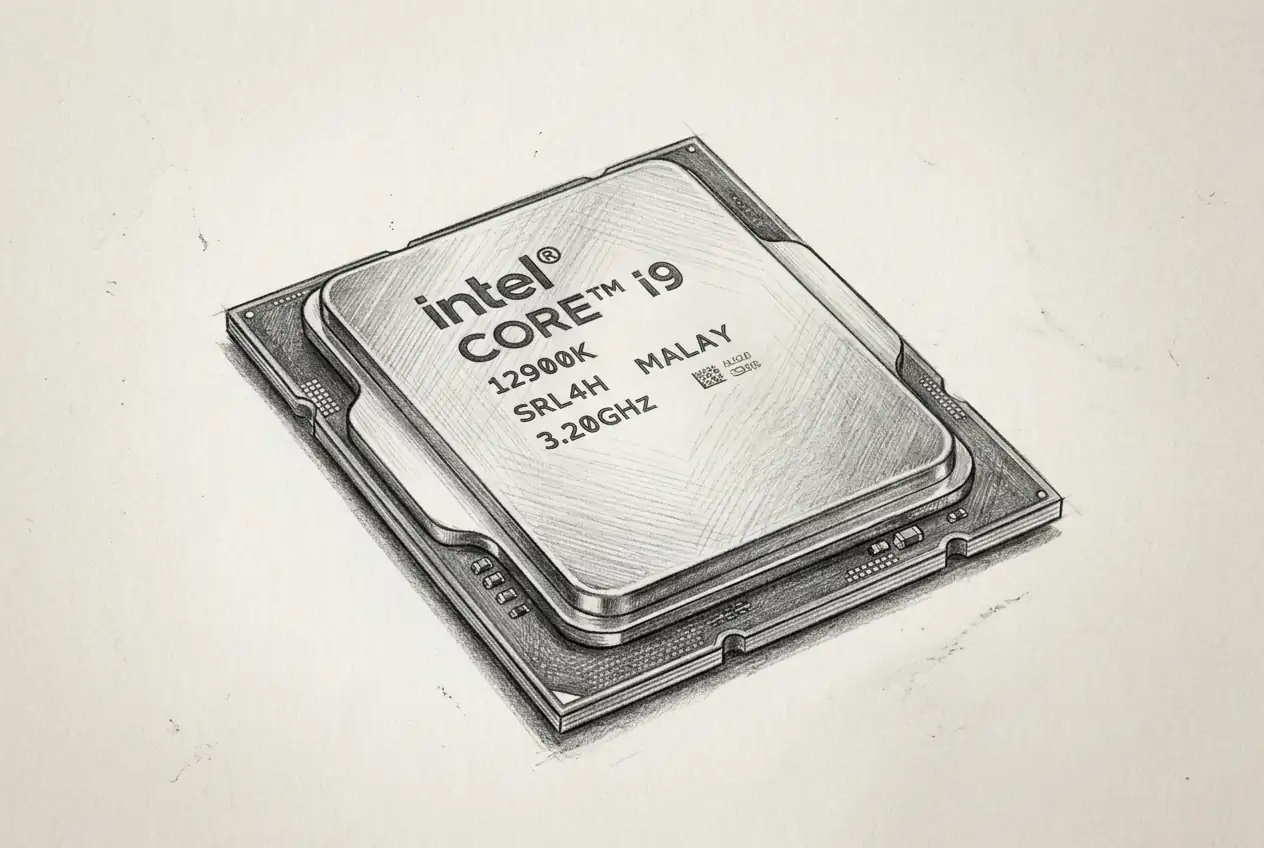
Shares shifted as Intel announced its next-generation chip manufacturing process hit a key early production stage on schedule, reinforcing a turnaround story that has already tripled the stock in 2026 and drawn one of Wall Street's rarest endorsements. At $122.05, up 4.3% in pre-market, the question is whether execution can keep pace with expectations now baked into a $540 billion market cap.
• Intel's Factory Hit Its Deadline, and That Alone Is News. At the 2026 VLSI Symposium, Intel announced that its upgraded chip-manufacturing process — an enhanced version of its most advanced node — entered risk production, meeting the timeline shared with customers and partners last year.
The upgrade delivers roughly 9% better performance at the same power level, or 18% lower power consumption at the same speed. For a company that spent years missing deadlines, on-time delivery is the foundational proof point investors needed. The new process is backward compatible with existing designs, meaning customers can switch without starting over — a practical advantage that lowers adoption barriers.
• BofA's Rare Double-Upgrade Resets the Wall Street Debate. Bank of America double-upgraded Intel to Buy from Underperform on June 11, lifting its price target to $135 from $96 and skipping the usual intermediate Hold rating entirely.
BofA now sees earnings power above $6 a share by 2030, up from a prior estimate of $3 to $4, with Intel's data-center and AI business reaching $43.7 billion.
The bank models foundry revenue climbing from $1.1 billion in 2026 to $47.1 billion by 2030 — a bet that Intel can become a serious rival to Taiwan's TSMC in making chips for other companies.
• The Yield Gap Is the Unresolved Risk. Intel's current yield — the share of usable chips per batch — stands at around 50% on its most advanced process, which is still being optimized.
By comparison, TSMC's advanced-node yields are reportedly already in the 80% to 90% range. Until Intel narrows that gap, profit margins on foundry work will remain thin. CEO Lip-Bu Tan expects formal commitments from multiple foundry customers in the second half of 2026 , but those deals hinge on proving manufacturing quality at scale.
• The Stock Price Already Assumes a Lot Goes Right. Intel has surged roughly 210% year-to-date, putting it on pace for its best annual showing since 1975.
Yet the stock sits in just 16% of S&P 500 fund portfolios, the second-least-owned name in its semiconductor peer group. That under-ownership could fuel further buying — if the foundry pipeline materializes. The risk: at current levels, any stumble in yields or customer signings could trigger a sharp reversal.