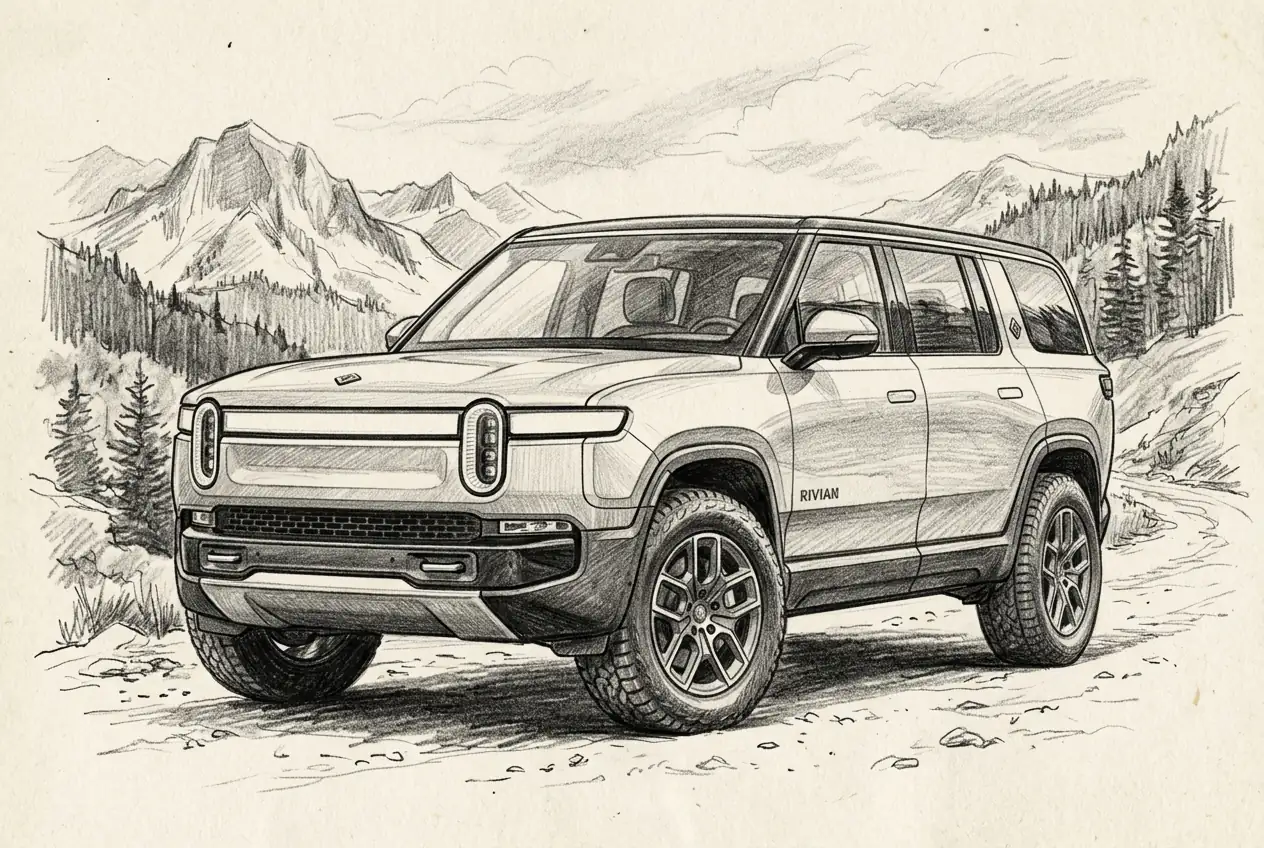
Shares of Rivian Automotive plunged 13.4% to $17.45 Tuesday morning after the EV maker announced a 75-million-share public offering just days after posting its strongest delivery quarter since 2024. The move rewrites the calculus for shareholders who had driven the stock up roughly 15.6% over the prior week on genuinely encouraging operating numbers.
The Good News Was Real — And the Market Rewarded It, Briefly
Rivian delivered 12,194 vehicles in Q2, well ahead of Wall Street expectations and its own prior guidance of 9,000 to 11,000 deliveries.
The company raised full-year 2026 delivery guidance to 65,000–70,000 vehicles, up from 62,000–67,000. Alongside the offering, Rivian projected Q2 revenues between $1.55 billion and $1.65 billion, comfortably above analysts' average expectations around $1.45 billion. None of that mattered once the dilution shoe dropped.
86 Million New Shares Erase the Rally's Gains
Rivian is selling 75 million shares with an underwriter option for 11.25 million more, diluting existing holders roughly 6% — enough to fund the ramp-up but enough to wipe out the prior week's share-price gains. Short interest had already climbed to 150.29 million shares, or about 14.6% of the public float , meaning bears were already positioned and piled on once the offering was announced.
The Cash Is for the Factory, Not a Rainy Day
Proceeds will fund equity contributions tied to Rivian's Department of Energy loan arrangement supporting its Georgia manufacturing buildout — the second plant the company needs to scale its more affordable midsize SUV into high-volume production. Cash reserves had already climbed to roughly $5.3 billion as of June 30, up from $4.8 billion at quarter-end Q1 , raising the question of whether this capital raise was truly necessary now or simply opportunistic after the stock rallied.
Wall Street Is Split on Whether the Trade-Off Works
JPMorgan raised its price target from $9 to $15 but kept an Underweight rating, cautioning on dilution despite the revenue beat.
Baird maintained its Outperform stance with a $23 price forecast, reflecting more optimism on operational progress. The divide captures the core tension: Rivian is demonstrably selling more cars, but it still burns cash and needs outside capital to fund growth. Until the company can finance expansion from its own earnings, every good quarter risks being followed by a capital raise — and another hit to the shareholders who believed in the good quarter.