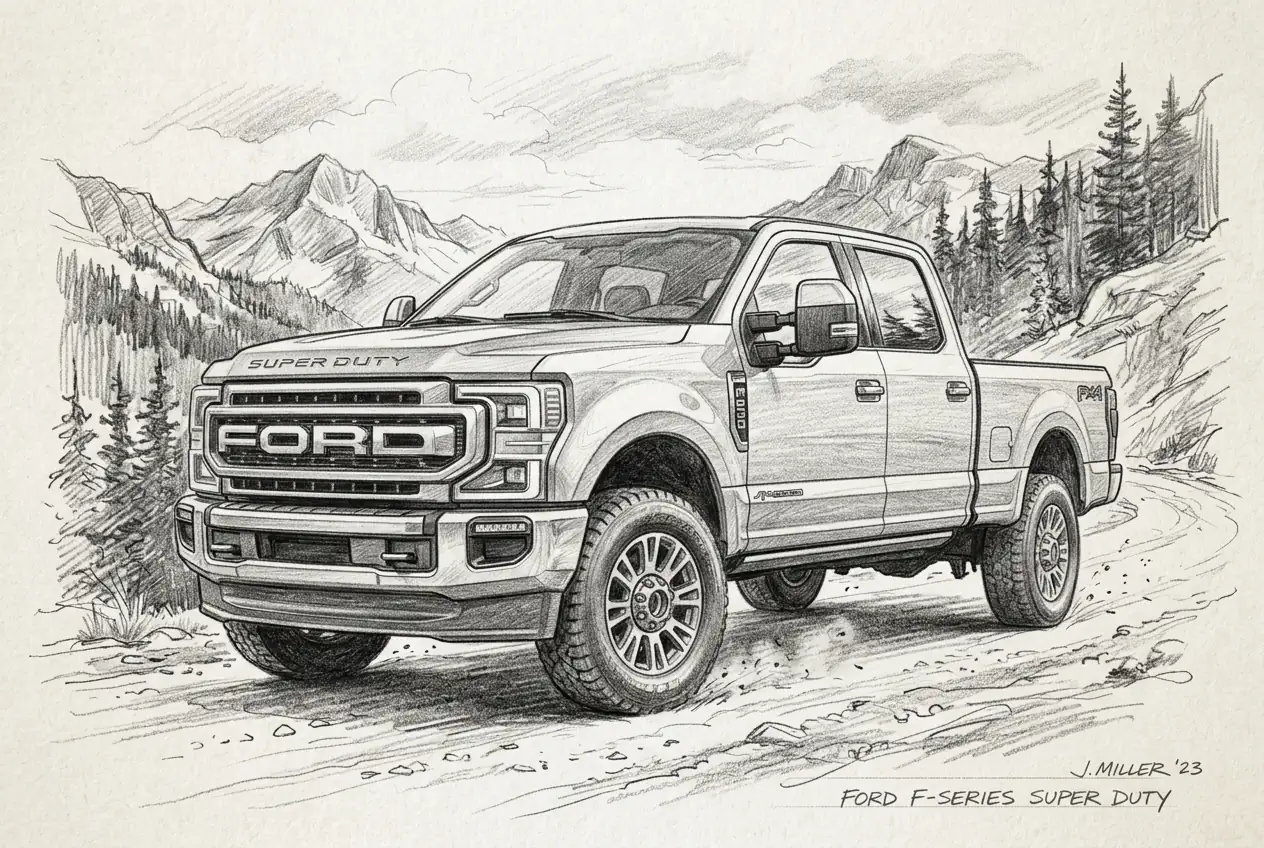
Shares of Ford surged 6.7% to $15.96 on July 29 after the automaker delivered a second-quarter earnings beat and lifted its full-year profit forecast for the second consecutive quarter — a signal that the core truck-and-commercial business is pulling further away from an EV unit still bleeding billions.
• The Headline Numbers Were Bigger Than Wall Street Expected. Ford posted adjusted earnings of $0.42 per share versus the $0.35 consensus , while revenue hit $48.3 billion, topping estimates of roughly $45.9 billion.
Adjusted EBIT — a measure of operating profit — came in at $2.5 billion , giving management the confidence to raise the bar for the rest of the year. For a stock that entered earnings week below $15, the beat was the clearest catalyst in months.
• The Guidance Raise Shows Real Momentum, Not Just a One-Time Bump. Ford now projects full-year adjusted EBIT of $10.0–$11.0 billion (up from $8.5–$10.5 billion) and adjusted free cash flow of $6.0–$7.0 billion (up from $5.0–$6.0 billion).
The traditional car-and-truck business alone was raised $500 million to between $5.0 and $5.5 billion , while projected losses in the EV division were narrowed to about $4 billion. That combination matters: it means profits are growing without depending on EV turnarounds.
• A $4.2 Billion Charge Is Ugly on Paper but Clears the Deck. The quarter included $3.6 billion in charges tied to unwinding Ford's battery joint venture with SK On and another $500 million from a canceled EV program , producing a GAAP net loss of $1.3 billion. CFO Sherry House noted "over $3 billion of this charge is non-cash" and said it "clears the runway" to repurpose those manufacturing assets for a new energy-storage business targeting data centers. Investors appear to agree — they're treating the write-down as a sunk cost rather than a warning sign.
• Ford Still Needs Trucks to Come Back Fully Online. CFO House said the company remains confident in recovering roughly $2.5 billion of vehicle volume lost after fires at aluminum supplier Novelis crippled F-Series production; that facility restarted last month.
At roughly 4.5× free cash flow and a ~4% dividend yield, Ford remains one of the cheapest large-cap income plays in the market — but only if truck production normalizes on schedule and the EV losses keep shrinking.