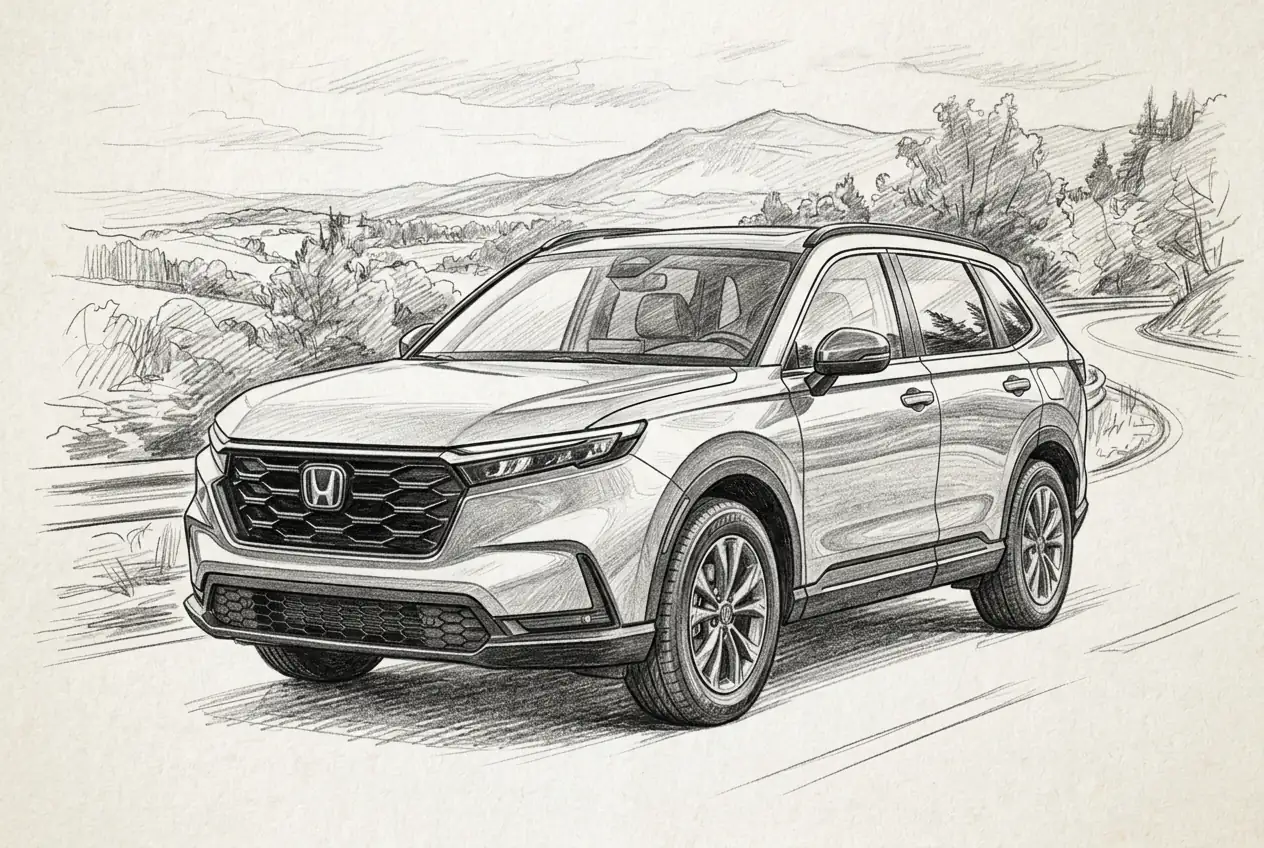
Shares jumped 5% to $27.80 in pre-market trading after American Honda reported May U.S. sales of 148,903 units, up 9.9% year-over-year, with the Honda brand alone climbing 10.5%. For a company still nursing its first annual loss in nearly seven decades, the question is whether strong American demand can convince investors the worst is behind them.
• Buyers Are Showing Up Despite Tariff Anxiety and Rising Prices. Honda is navigating a market with industry-wide sales expected in the high-15-million to low-16-million-unit range , and yet it is outpacing that backdrop handily. The 9.9% May growth follows a strong Q1 result of 336,830 units and a full-year 2026 target of about 1.5 million units, up 4% from last year . May's pace, if sustained, would blow past that target — a rare bright spot for a stock trading near its 52-week low of $23.25.
• The $9 Billion EV Writedown Still Looms Over the Balance Sheet. Honda reported its first annual net loss as a public company in nearly 70 years, driven by more than $9 billion in EV-related writedowns and charges . Those charges included ¥521.4 billion in impairment losses on plant and equipment tied to electric models in North America and China . Strong gas and hybrid sales don't erase that hole, but they do show the core business is generating the cash Honda needs to stabilize.
• Hybrids, Not Pure Electrics, Are Doing the Heavy Lifting. Honda hybrid models set a new Q1 record on sales of 95,882, with CR-V and Accord hybrids exceeding 55% of their respective model sales . CEO Toshihiro Mibe acknowledged the need to work on hybrids and gasoline models, not just electric vehicles . This pivot toward what customers actually want to buy is what's producing the sales numbers investors cheered this morning.
• Profitability Is the Real Test Ahead. Honda expects to return to profitability in the fiscal year ending March 2027, projecting operating profit of ¥500 billion and net income of ¥260 billion . Analysts have a 12-month price target of $28.28 — roughly where the stock sits now after today's pop. That means the sales beat may already be priced in. Investors should watch whether June and summer volumes confirm a durable trend or just a tariff-driven pull-forward, where buyers rushed to purchase before potential price hikes.