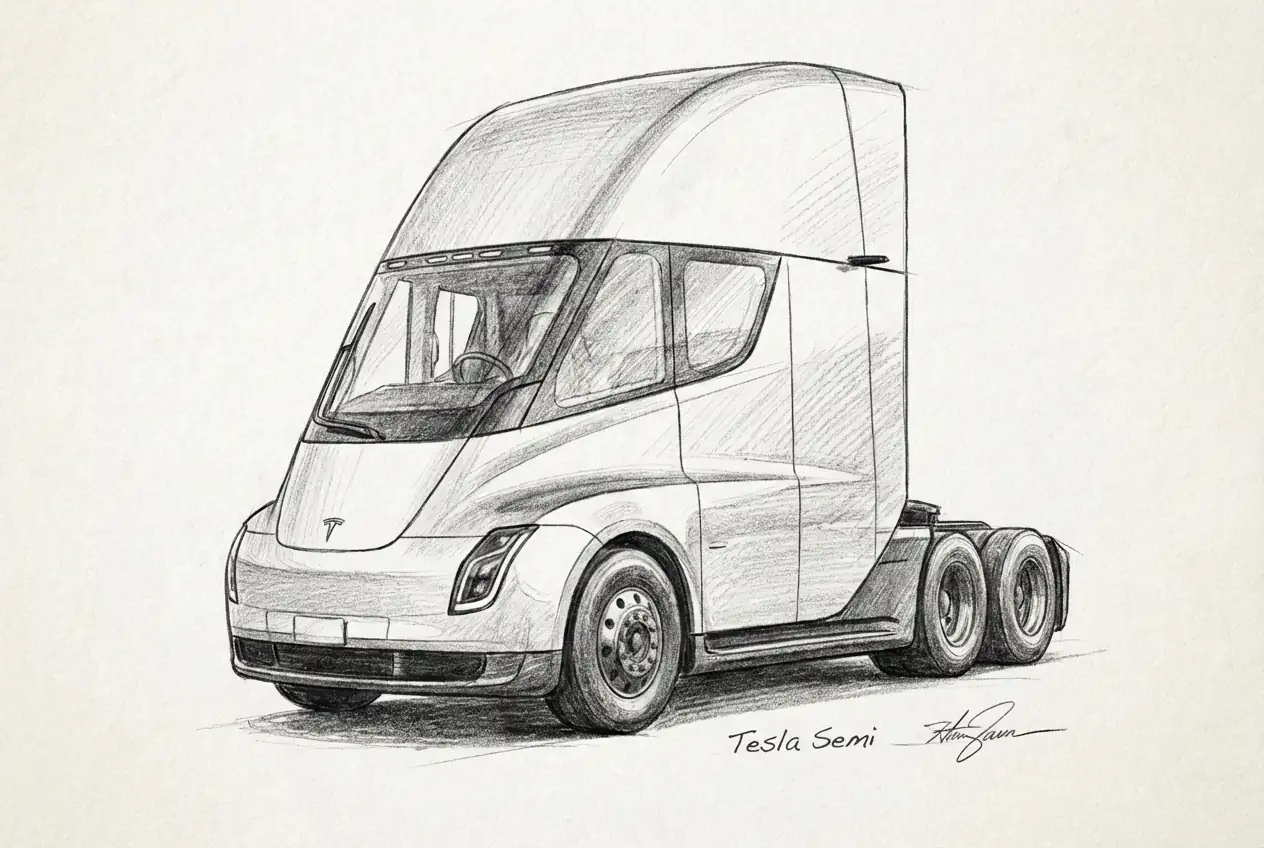
Shares surged +3.7% to $427.07 after WattEV, a California electric trucking operator, placed a 370-unit order for Tesla's heavy-duty Semi — the largest single electric truck order in California history. The deal puts real revenue behind a program that spent nine years in development limbo, but investors should weigh the headline against production realities.
A $100 Million Deal That Validates the Product
WattEV ordered 370 Tesla Semis valued at approximately $100 million, marking the state's biggest single electric truck order to date.
The company selected the Tesla Semi after issuing a public request for proposals, choosing it based on cost, performance, and availability. Critically, WattEV was previously one of Nikola's biggest customers, taking delivery of at least 36 Nikola electric trucks — a bet that collapsed when Nikola filed for Chapter 11 bankruptcy. That a burned operator picked Tesla through a competitive process is a meaningful commercial endorsement.
The Factory Exists, but the Ramp Is the Real Test
Volume production started on April 29, 2026, at a facility designed to produce 50,000 Semis annually. But don't confuse capacity with output: full-year Semi output is expected to come in between 5,000 to 15,000 units in 2026.
Deliveries of the first 50 Semis to WattEV begin in 2026, with the full fleet operational by end of 2027. At $290,000 per long-range unit, even 10,000 trucks would add roughly $2.9 billion in revenue — meaningful but modest against Tesla's $97 billion trailing annual sales.
Price Undercuts Rivals, but Charging Infrastructure Is Still Early
At $290,000 for the 500-mile version, the Semi undercuts every other Class 8 battery-electric truck on the market.
Analysis shows the Tesla Semi can save over $400,000 versus diesel over its lifetime. Yet the charging network remains thin: Tesla has mapped 66 Megacharger locations across 15 states , and plans roughly 46 public stations by 2027. Trucks without chargers don't move freight.
Stock Is Running Ahead of Analyst Targets At $427, TSLA now trades 5% above the consensus $406.65 analyst price target. The five-day rally of roughly 9.3% prices in significant optimism. In California's clean truck voucher program, the Tesla Semi accounted for 965 of 1,067 applications — dwarfing Daimler, PACCAR, and Volvo combined. Demand clearly exists. The question is whether Tesla can convert backlog into trucks on the road fast enough to justify a stock price that's already anticipating success.